![[personal profile]](https://www.dreamwidth.org/img/silk/identity/user.png) highlyeccentric
highlyeccentricBut has about tripled her current library loans, so the TBR stack is now encroaching on the living room side table.
Unlike last fortnight, there isn't a real stand-out thought provoker. I finished Tim Mackintosh's abridgement of the Travels of Ibn Battutah, which were a delight; what really struck me was that, with the exception of Delhi and the Maldives, he left it entirely opaque how he *came by enough money to live and maintain his retinue*. There's a lot of 'in such and such a town they basically adopt travellers', and I find myself how far down the social hierarchy that extends.
Probably the best essay I read this week was Tara Haelle (Elemental), Your ‘Surge Capacity’ Is Depleted — It’s Why You Feel Awful. It's hardly new news, but I appreciated the 'surge capacity' framing; and the Fairly Obvious Advice at the end is i think well delivered and more meaningful with the full essay for context.
V.S Naipul's description of adopting a scared kitten, in this long essay about grief, is utterly adorable:
I also became rather agitated about the #Reclaimhername controversy: firstly, as many noted, it dismisses the complex relationships of writers like Vernon Lee and George Sand to their assigned gender and to the persona of their pen name. Secondly, it insults literally everyone involved (the intro to the George Elliot novel is so patronising!). Thirdly, in the case of someone like George Elliot, the birth name they used *isn't the female-coded name she used in her personal life* (she used her common-law spouse's name although they weren't legally married). And then there's the hot mess with the woman whose birth cert says Edith Maude Eaton, who published *one* (rather problematic) novel as Mahlon T. Wing (the one chosen by the Women's Prize for this stunt) but several others under the name Sui Sin Far, which she preferred over her English name as it aligned her with her Chinese heritage. Details on that at Pema Monaghan's Twitter.
Onwards to Weekend Reading update!
Currently Reading:
Fiction for fun: I'm now only four stories from the end of Wake, Siren! Three Daughters of Eve is back on the backburner.
Non-fiction for fun: All on hiatus
Poetry: Some headway through Paradise Lost via podcast.
Lit Mag: Finally started the Autumn Meanjin. Never mind that it's nearly spring in Aus.
For work: I think only 'A New Companion to Chaucer', which is still on the currently-reading list as I have scans of several more chapters yet to skim through. Will pick up more on Monday, no doubt.
Recently Finished:
 Slippery Creatures by K.J. Charles
My rating: 3 of 5 stars
Two problems I had here: one is that it simply did not grab me; I couldn't get immersed in it, I found myself baffled as to why Will was trusting Kim (and there didn't seem to be ENOUGH simmering UST to justify the blind spot), and the rehash of 'but not the war office' from Spectred Isle didn't work for me. In part, all of this first problem could be that I'm struggling with immersive fiction of all sorts at the moment.
Second problem, which i might not have noticed or cared about had I been immersed in UST: 2020 has destroyed my ability to go along with 'self-proclaimed anarchists are secretly funded by a cabal of capitalists' plots. Like. MUST we.
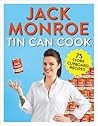 Tin Can Cook: 75 Simple Store Cupboard Recipes by Jack Monroe
My rating: 4 of 5 stars
It is a good thing that this book exists, but it is not going to be my favourite (not least because many things that are available affordably tinned in the UK are not here). Not up to the standards of Cooking On A Bootstrap.
 What Belongs to You by Garth Greenwell
My rating: 5 of 5 stars
WELL. First off, this is a brilliant book, written with a fine sense of insight and a hand that deploys words like a fillet knife.
Greenwell does, objectively, a great job of the audio recording.
I also discovered that this is a genre of book that I *cannot deal with* by audio. There's a lot of... knowing the characters are going to be excruciatingly embarrassed, and probably even LIKE it. Great literary work. I can't handle run-up to the inevitable embarrassment at the speed of reading aloud, though. My mind just... slides away. Part of the early-teen flashbacks I actually had to look up and skim through on google books.
 Desire in Dante and the Middle Ages by Manuele Gragnolati
My rating: 4 of 5 stars
Read it for an essay on Alain de Lille and the Roman de la Rose, which was vr useful.
 Chaucer’s (Anti-)Eroticisms and the Queer Middle Ages by Tison Pugh
My rating: 3 of 5 stars
Swings wildly between useful close reading and nigh-impenetrable High Theory.
 Courtly Contradictions: The Emergence of the Literary Object in the Twelfth Century by Sarah Kay
My rating: 4 of 5 stars
I think this is more than my second reading - probably third or fourth- and I think I FINALLY understood the introduction. Applaud me.
 The Travels of Ibn Battutah by Ibn Battuta
My rating: 4 of 5 stars
This was excellent fun! Especially once Ibn B. got past Mecca (until which, I'm told, the descriptions are quite formulaic) and onto other parts. The steppes and Constantinople are some of my favourite bits, as are the south asian islands.
And this is an abridgement of an abridgement! The original must be enormous.
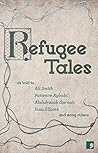 Refugee Tales by Ali Smith
My rating: 4 of 5 stars
I have mixed feelings about this. As an interactive project, especially in its first iteration, where a group of ex-detainees and allies did a solidarity march to Canterbury, stopping to read out anonymised stories... it sounds like it was very powerful. It's still going on annually now, I believe.
What strikes me is that... storytelling only goes so far. I remember a student in Geneva waxing fervent about how if we only knew the STORIES of the Mediterranean migrants people would view them differently. This was not long after Behrouz Bouchani had published 'No Friend But The Mountains', and I, a jaded white Australian, probably was too harsh on this kid, because... the appetite for Stories Of Suffering is so much greater than any change that could be attributed to it.
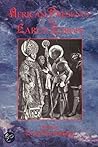 African Presence In Early Europe by Ivan Van Sertima
My rating: 3 of 5 stars
Well, this is a worthwhile book to exist, albeit quite outdated now. The couple of chapters I read were useful for contextualising Ibn B's ethnic and social status, and also a bit o_0 in some of the sweeping assumptions that got tossed out. Apparently profligacy and polygamy were the downfall of the civilisation of Al-Andalus, who knew!
Meanwhile, Online short stories:
Sarah Gailey (Uncanny Magazine), Away With The Wolves, from the Disabled People Destroy Science Fiction issue.
Up Next: One of my work goals for the coming week is to skim through as much as I can of the teaching-related library books I have out, so. Those, probably. When I'm done with Wake, Siren, I might move on to 'The World's Wife', or maybe to something not even tangentially work-related (Erotic Stories for Punjabi Widows has been catching my eye).
Links backlog:
No Author (Medieval Histories Magazine 2018), New Research Into the Black Death: looks at Norwegian scientific models of plague spread across Europe, and also at Norwegian archaeological findings; suggests transfer by human ectoparasites (rather than rats and rat fleas). I had been asked about whether historians still believed the black death was bubonic rather than pneumonic - my local health historian had encountered epidemiologists who argued for pneuomonic spread. All the digging I could do confirmed that Monica Green is not committed to either case (for mainly bubonic or mainly pneumonic spread), and I will commit to neither. This hypothesis, for bubonic spread but via a different vector, does seem compelling, however (and I encountered it in a number of other places both more and less scholarly).
Estelle Laure (LitHub), On being a young reader attracted to the darkest possible stories. Laure is a horror reader, which I am not; but her comments on this I think neatly distill why I am usually uninterested in gay utopia fiction:
Mellissa Faliveno, To live alone in the woods and write. I love any kind of writing with a strong sense of place, and this has that.
Diane Cook, interview with David Adjmi (Electric Lit), A Queer Memoir about navigating toxic masculinity.
David Crystal (LitHub), Some of the earliest written dialogues were in Middle English literature. Earliest in English, he means. I'm not a huge fan of Crystal but this is kinda neat.
Rachel Cohen (LitHub), On Jane Austen's Politics of Walking. I am not an Austen fan, so I quite like essays that can make me appreciate aspects thereof.
Mike Seccombe (Saturday Paper), Could Josh Frydenberg ease this crisis by printing money. Seccombe has a skill in distilling complex econommic theory: here he breaks down Modern Monetary Theory, which involves some radical ideas like 'printing money', but also components like a jobs guarantee that we see espoused in slightly more mainstream left politics. (I'd have liked to know how, or if, UBI fits in here)
Rick Morton (Saturday Paper), Lost Function: Long-term consequences of surviving Coronavirus
Tabitha Lean and Debbie Kilroy (Saturday Paper), Speaking out for Criminalised Women.
Backlog of links is about 18 days old now! More ... definitely next weekend, hopefully sooner.
Unlike last fortnight, there isn't a real stand-out thought provoker. I finished Tim Mackintosh's abridgement of the Travels of Ibn Battutah, which were a delight; what really struck me was that, with the exception of Delhi and the Maldives, he left it entirely opaque how he *came by enough money to live and maintain his retinue*. There's a lot of 'in such and such a town they basically adopt travellers', and I find myself how far down the social hierarchy that extends.
Probably the best essay I read this week was Tara Haelle (Elemental), Your ‘Surge Capacity’ Is Depleted — It’s Why You Feel Awful. It's hardly new news, but I appreciated the 'surge capacity' framing; and the Fairly Obvious Advice at the end is i think well delivered and more meaningful with the full essay for context.
V.S Naipul's description of adopting a scared kitten, in this long essay about grief, is utterly adorable:
The kitten was absolutely terrified. It had had an up-and-down life for many days and had no idea what was coming next. It tried now to run away, though there was no place for it to run to. It dug its little claws into the screen door and raced up to the ceiling of the utility room. That was as far as it could go, and I reached up and brought him down. Something extraordinary then happened. It was as though, feeling my hand, he felt my benignity. He became calm, then he became content; he was happy to be in my hand (not much bigger than him), so that in a few seconds, guided by a cat’s instinct alone, he moved from terror to trust. He ran up my arm to my shoulder; when I introduced him to some of my lunchtime guests, he sought to do the same with them. I knew nothing about cats. But he was easy to like.
I also became rather agitated about the #Reclaimhername controversy: firstly, as many noted, it dismisses the complex relationships of writers like Vernon Lee and George Sand to their assigned gender and to the persona of their pen name. Secondly, it insults literally everyone involved (the intro to the George Elliot novel is so patronising!). Thirdly, in the case of someone like George Elliot, the birth name they used *isn't the female-coded name she used in her personal life* (she used her common-law spouse's name although they weren't legally married). And then there's the hot mess with the woman whose birth cert says Edith Maude Eaton, who published *one* (rather problematic) novel as Mahlon T. Wing (the one chosen by the Women's Prize for this stunt) but several others under the name Sui Sin Far, which she preferred over her English name as it aligned her with her Chinese heritage. Details on that at Pema Monaghan's Twitter.
Onwards to Weekend Reading update!
Currently Reading:
Fiction for fun: I'm now only four stories from the end of Wake, Siren! Three Daughters of Eve is back on the backburner.
Non-fiction for fun: All on hiatus
Poetry: Some headway through Paradise Lost via podcast.
Lit Mag: Finally started the Autumn Meanjin. Never mind that it's nearly spring in Aus.
For work: I think only 'A New Companion to Chaucer', which is still on the currently-reading list as I have scans of several more chapters yet to skim through. Will pick up more on Monday, no doubt.
Recently Finished:
Slippery Creatures by K.J. CharlesMy rating: 3 of 5 stars
Two problems I had here: one is that it simply did not grab me; I couldn't get immersed in it, I found myself baffled as to why Will was trusting Kim (and there didn't seem to be ENOUGH simmering UST to justify the blind spot), and the rehash of 'but not the war office' from Spectred Isle didn't work for me. In part, all of this first problem could be that I'm struggling with immersive fiction of all sorts at the moment.
Second problem, which i might not have noticed or cared about had I been immersed in UST: 2020 has destroyed my ability to go along with 'self-proclaimed anarchists are secretly funded by a cabal of capitalists' plots. Like. MUST we.
Tin Can Cook: 75 Simple Store Cupboard Recipes by Jack MonroeMy rating: 4 of 5 stars
It is a good thing that this book exists, but it is not going to be my favourite (not least because many things that are available affordably tinned in the UK are not here). Not up to the standards of Cooking On A Bootstrap.
What Belongs to You by Garth GreenwellMy rating: 5 of 5 stars
WELL. First off, this is a brilliant book, written with a fine sense of insight and a hand that deploys words like a fillet knife.
Greenwell does, objectively, a great job of the audio recording.
I also discovered that this is a genre of book that I *cannot deal with* by audio. There's a lot of... knowing the characters are going to be excruciatingly embarrassed, and probably even LIKE it. Great literary work. I can't handle run-up to the inevitable embarrassment at the speed of reading aloud, though. My mind just... slides away. Part of the early-teen flashbacks I actually had to look up and skim through on google books.
Desire in Dante and the Middle Ages by Manuele GragnolatiMy rating: 4 of 5 stars
Read it for an essay on Alain de Lille and the Roman de la Rose, which was vr useful.
Chaucer’s (Anti-)Eroticisms and the Queer Middle Ages by Tison PughMy rating: 3 of 5 stars
Swings wildly between useful close reading and nigh-impenetrable High Theory.
Courtly Contradictions: The Emergence of the Literary Object in the Twelfth Century by Sarah KayMy rating: 4 of 5 stars
I think this is more than my second reading - probably third or fourth- and I think I FINALLY understood the introduction. Applaud me.
The Travels of Ibn Battutah by Ibn BattutaMy rating: 4 of 5 stars
This was excellent fun! Especially once Ibn B. got past Mecca (until which, I'm told, the descriptions are quite formulaic) and onto other parts. The steppes and Constantinople are some of my favourite bits, as are the south asian islands.
And this is an abridgement of an abridgement! The original must be enormous.
Refugee Tales by Ali SmithMy rating: 4 of 5 stars
I have mixed feelings about this. As an interactive project, especially in its first iteration, where a group of ex-detainees and allies did a solidarity march to Canterbury, stopping to read out anonymised stories... it sounds like it was very powerful. It's still going on annually now, I believe.
What strikes me is that... storytelling only goes so far. I remember a student in Geneva waxing fervent about how if we only knew the STORIES of the Mediterranean migrants people would view them differently. This was not long after Behrouz Bouchani had published 'No Friend But The Mountains', and I, a jaded white Australian, probably was too harsh on this kid, because... the appetite for Stories Of Suffering is so much greater than any change that could be attributed to it.
African Presence In Early Europe by Ivan Van SertimaMy rating: 3 of 5 stars
Well, this is a worthwhile book to exist, albeit quite outdated now. The couple of chapters I read were useful for contextualising Ibn B's ethnic and social status, and also a bit o_0 in some of the sweeping assumptions that got tossed out. Apparently profligacy and polygamy were the downfall of the civilisation of Al-Andalus, who knew!
Meanwhile, Online short stories:
Up Next: One of my work goals for the coming week is to skim through as much as I can of the teaching-related library books I have out, so. Those, probably. When I'm done with Wake, Siren, I might move on to 'The World's Wife', or maybe to something not even tangentially work-related (Erotic Stories for Punjabi Widows has been catching my eye).
Links backlog:
I have been reading violent stories since I learned how to read at all, not because I’m a proponent of violence, or because I fetishize it, or because I like blood and gore. I don’t. It wasn’t only horror that provided solace, though those books were cathartic. The year I was twelve I also read I Know Why the Caged Bird Sings, Lord of the Flies, The Outsiders, The Color Purple, Of Mice and Men, each one revealing a little more.
Still, people have questioned why I dwell in darkness, why I like twisted plots and books that are considered depressing. I’ll venture to speak on behalf of readers like me: We read those stories because they don’t lie. They show us the scorpions and the worms under the rock. In doing so, those books make us kinder, more aware, more compassionate.
Backlog of links is about 18 days old now! More ... definitely next weekend, hopefully sooner.
no subject
Date: 2020-08-27 06:28 pm (UTC)I'm very glad I drifted over from
And this is the first I've heard of any "reclaim her name" controversy, but I suspect I'm going to get grumpy about it whenever I learn more.
no subject
Date: 2020-08-29 07:13 pm (UTC)If you've somehow escaped the #ReclaimHerName thing, and wish to be grumpy about it, my latest links post has some relevant essays...
no subject
Date: 2020-08-31 08:33 pm (UTC)