![[personal profile]](https://www.dreamwidth.org/img/silk/identity/user.png) highlyeccentric
highlyeccentricCurrently Reading: a collection entitled 'Tales before Narnia', which is surprisingly interesting.
Recently read: most recently, a stack of Miss Fisher e-books, which I will review in due course.
Catching up since last time I did this post:
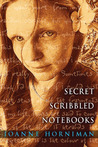 Secret Scribbled Notebooks by Joanne Horniman
My rating: 3 of 5 stars
I realised some way into this book that I must have read it before - I recognised certain turns of phrase. Horniman has a way with words, especially for small-scale description. Her actual plot skills are a bit weak, and... idek, so much of this book annoyed me. The love interest was bland. The teenage heroine's stories were exactly as self-absorbed and egotistical as you'd expect from teenage fiction (I feel this is a case where suspension of disbelief is important: if you're going to put your character's writing in your book, it should be publishable in its own right. Unless perhaps they are a child character in an adult novel).
I *enjoyed* reading this book, as I always do with Horniman - but mostly for the nostalgic opportunity to climb into her world and pretend I'm on the mid-north coast of NSW.
Finally: no one who grows up with mangoes everywhere on the mid-north coast thinks of them as 'exotic'. Or if they do this is because they have absorbed WEIRD ORIENTALIST SHIT from society at large. Pls stop.
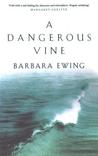 A Dangerous Vine by Barbara Ewing
My rating: 4 of 5 stars
*Overall*, I thought this was very good. It focuses on a white recent high school graduate in 1950s NZ, who is accepted into a civil service / university work-study program and assigned to work in the Bureau, the official title of which is never spelled out, but which handles Maori affairs. Hating French, and fascinated by the Maori language she hears at work, our protag manages to finangle special arrangements to take Maori as her required langauge for her Arts degree. She proceeds to blunder through the book trying to reconcile the fact that she loves the language and appreciates her co-workers with her "knowledge" that the language is dying and with the part where she keeps forgetting people outside of the Bureau are scathingly racist.
There is something a little bit odd about entering into a period/place specific race politics through the eyes of a white boundary-crosser: I do sort of feel like the protag's boyfriend Timoti, a Maori lawyer, would have been a perfectly interesting protag in his own right. But Ewing doesn't gloss over how *clueless* our white protag (Margaret? i think?) can be around her Maori peers even as she finds herself increasingly alienated from her white family/their expectations.
I trust that Ewing did her research on 1950s politics and race relations. She *didn't* do her research on 1950s education, though. Margaret has to write an essay on 'gender' in an English class. That wasn't even a distinct term in the 1950s let alone a field of academic enquiry. Given Margaret is stomping around complaining that obligatory French is 'useless' and chafing against colonial-cringe academic norms, that could have been done a *whole lot better* if the style of her literary courses was properly historicised. 1950s, you should have a lot of Leavisite plain criticism and waffle about 'taste'. The poets agitating for 'indigenous' (which, it becomes clear, does not mean Maori but home-grown white NZ) authors on the curriculum, although Margaret wasn't interested in their arguments, they seemed to be characterising the lit curriculum as Leavisite - but that didn't seem to be what Margaret was studying.
And *were* SS in English in NZ in the 1950s expected to be able to translate Beowulf after a lecture-only course? Apparently UCL does or recently did OE in lecture-only settings, so it's possible, but at the very least, Margaret-who-hates-French should have been WAY more pissed off about learning OE than she seemed to be.
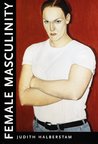 Female Masculinity by J. Jack Halberstam
My rating: 5 of 5 stars
This is gooood. I have many thoughts going in many different directions, p sure I can't do the book justice in review format.
Still to come: a stack of LM Montgomery and a stack of Kerry Greenwood.
To Read Next: Um... serious scholarship on the Prose Merlin?
Recently read: most recently, a stack of Miss Fisher e-books, which I will review in due course.
Catching up since last time I did this post:
Secret Scribbled Notebooks by Joanne HornimanMy rating: 3 of 5 stars
I realised some way into this book that I must have read it before - I recognised certain turns of phrase. Horniman has a way with words, especially for small-scale description. Her actual plot skills are a bit weak, and... idek, so much of this book annoyed me. The love interest was bland. The teenage heroine's stories were exactly as self-absorbed and egotistical as you'd expect from teenage fiction (I feel this is a case where suspension of disbelief is important: if you're going to put your character's writing in your book, it should be publishable in its own right. Unless perhaps they are a child character in an adult novel).
I *enjoyed* reading this book, as I always do with Horniman - but mostly for the nostalgic opportunity to climb into her world and pretend I'm on the mid-north coast of NSW.
Finally: no one who grows up with mangoes everywhere on the mid-north coast thinks of them as 'exotic'. Or if they do this is because they have absorbed WEIRD ORIENTALIST SHIT from society at large. Pls stop.
A Dangerous Vine by Barbara EwingMy rating: 4 of 5 stars
*Overall*, I thought this was very good. It focuses on a white recent high school graduate in 1950s NZ, who is accepted into a civil service / university work-study program and assigned to work in the Bureau, the official title of which is never spelled out, but which handles Maori affairs. Hating French, and fascinated by the Maori language she hears at work, our protag manages to finangle special arrangements to take Maori as her required langauge for her Arts degree. She proceeds to blunder through the book trying to reconcile the fact that she loves the language and appreciates her co-workers with her "knowledge" that the language is dying and with the part where she keeps forgetting people outside of the Bureau are scathingly racist.
There is something a little bit odd about entering into a period/place specific race politics through the eyes of a white boundary-crosser: I do sort of feel like the protag's boyfriend Timoti, a Maori lawyer, would have been a perfectly interesting protag in his own right. But Ewing doesn't gloss over how *clueless* our white protag (Margaret? i think?) can be around her Maori peers even as she finds herself increasingly alienated from her white family/their expectations.
I trust that Ewing did her research on 1950s politics and race relations. She *didn't* do her research on 1950s education, though. Margaret has to write an essay on 'gender' in an English class. That wasn't even a distinct term in the 1950s let alone a field of academic enquiry. Given Margaret is stomping around complaining that obligatory French is 'useless' and chafing against colonial-cringe academic norms, that could have been done a *whole lot better* if the style of her literary courses was properly historicised. 1950s, you should have a lot of Leavisite plain criticism and waffle about 'taste'. The poets agitating for 'indigenous' (which, it becomes clear, does not mean Maori but home-grown white NZ) authors on the curriculum, although Margaret wasn't interested in their arguments, they seemed to be characterising the lit curriculum as Leavisite - but that didn't seem to be what Margaret was studying.
And *were* SS in English in NZ in the 1950s expected to be able to translate Beowulf after a lecture-only course? Apparently UCL does or recently did OE in lecture-only settings, so it's possible, but at the very least, Margaret-who-hates-French should have been WAY more pissed off about learning OE than she seemed to be.
Female Masculinity by J. Jack HalberstamMy rating: 5 of 5 stars
This is gooood. I have many thoughts going in many different directions, p sure I can't do the book justice in review format.
Still to come: a stack of LM Montgomery and a stack of Kerry Greenwood.
To Read Next: Um... serious scholarship on the Prose Merlin?