Wednesday Reading Meme
Jan. 15th, 2015 03:21 pm![[personal profile]](https://www.dreamwidth.org/img/silk/identity/user.png) highlyeccentric
highlyeccentricCurrently Reading: Alexis Wright, Carpentaria, and I just started Jonas Jonasson The 100 Year Old Man Who Climbed Out the Window and Disappeared. Carpentaria is very, very good but sort of heavy going - it's perhaps not good holiday reading.
Recently Finished:
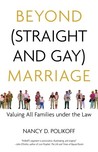 Beyond (Straight and Gay) Marriage: Valuing All Families under the Law by Nancy D. Polikoff
My rating: 4 of 5 stars
This was very, very good. American-centric (and boy did it show - her section on Australian law showed a marked lack of understanding as to how much less significant state law is here), but still good.
Polikoff's key arguments were as follows:
1. That equal marriage rights do not and will not guarantee protection for a wide range of family structures, and that many LGBTetc folk will continue to be excluded if, for instance, their peers can marry but an LGBT person caring for a niece or nephew will still struggle to access the same rights in terms of access, insurance, and so on that married parents can access. Polikoff offered many examples of gay, straight, and not-sexual-at-all relationships that would not be protected by marriage equality. (For instance, a woman in New York lost her housing subsidy when she applied to have her elderly father move in, because this constituted 'overcrowding'. A spouse would have been fine.)
2. That the feminist and LGBTetc movements of the 60s and 70s worked toward recognition and protection for *all family structures*, often by decreasing the importance of marriage when it came to access to services and support. That the current focus on marriage is regressive by comparison.
3. That the rhetoric of the marriage equality movement has too easily conceded ground to the conservative 'marriage movement' backlash, in granting marriage special status and flowery rhetoric. Marriage equality activists for instance often push the same argument as conservatives, vis, that marriage is good for children. The long-term outcomes of surrendering this ground are unlikely to be good.
4. That other options exist in current US law and/or overseas, which could be strengthened and more broadly applied. For instance, there's a federal act which provides family and carer's leave (can't remember it's name) to federal employees, and it has a non-restrictive definition of family. An employee can take carer's leave for any child they share in the primary care of, for instance, regardless of whether they are or are married to that child's natural parent.
I liked this book. It articulated clearly my growing discomfort with the rhetoric of marriage & children as distilled into soundbites on the Australian Marriage Equality page. Just recently, for instance, a pair of ladies, one of whom is a US citizen and one Australian, were pictured with a caption explaining that it's so easy to enter the US: they can say 'this is my wife' and everyone understands! Then they come home and are no longer married. WELL. Yes. Except under US law they *have* to be married to migrate; you can quite easily get around in Australia as same-sex defacto partners. If airport staff don't understand 'this is my partner' then they need a re-education, but NOT in favour of marriage, bloody hell, plenty of people come and go in airports with their de-facto spouses.
And I really am getting fed up with the cute 'but why can't my mummies marry?' pictures. Why can't your mummies start by explaining that the idea that married parents are the best family is, while widely held, wrong and wrong-headed and worth challenging? HRMPH.
Also, all this concerns me in a sharply personal way, because of how my family is no longer mum & dad and two directly descended kids. The family structure surrounding my little sister is a lot more complicated than that, and, well, we *are* one of those families who, without spending a lot of time and money on wills and solicitors and so on, would end up with an inappropriate distribution of resources and legalities in the event of my parents' sudden death. Matters like care of children are not simple in my little sister's cluster of the family, either. Plus, I watched little sister try to figure out her family structure as a tot, and the overwhelming *normativity* of mum&dad&twopointfivekids really did not help her understand and embrace her own family. And the inclusion of mum&mum&twopointfivekids in the standard would not reeeeally help with that. BAH.
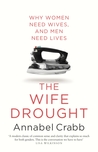 The Wife Drought by Annabel Crabb
My rating: 3 of 5 stars
This book is not the second coming of feminism.
It's FUN - full of anecdotes and Crabb's trademark snark, but it is not the second coming of feminism. It said nothing we did not already know (... quite frankly, aside from the stats, its key premises were well known in the EIGHTIES. Women add work to household responsibilities. Men do not typically pick up the latter. Men who do are regarded as weirdos. It would be good if we could do something about the latter two points). Crabb offers no constructive solutions or even pointers on how her examples of stay-at-home Dads do make it work. Her conclusion rather wishy-washily suggests the digital age might help, without apparently having noted that telecommuting has been on the *decline* since the financial crisis.
Plus, well, Crabb is aware of some of the sacrifices she herself makes in the name of functioning marriage rather than feminism, but I am not as rosy-eyed as she. She regards her career change as a personal positive, and maybe it is, but it still makes her a statisitic: woman shifts to less cutthroat, more flexible work environment after having kids. She doesn't quiiite see that this is probably a personal bonus for *everyone*, and that's why it happens, yanno? Although when talking about what men lose by not taking on more home duties, she does suggest that they might be missing out on the personal-development and reevaluation time that she sees many women experiencing during mat leave.
Also, although working class women do come up a fair bit, they're statistics mostly. She hasn't found many working class women or men to TALK to. Gives the impression that the only people who's workforce participation we care about is the educated elite.
HOWEVER she, unlike most tracts on the wage gap, did have the statistics to point out that the wage gap is *lower* in blue-and-pink collar jobs than white. Why? Because award wages are good for something! The wage gap in working classes seems to be affected by pink-collar streaming (childcare is paid less than road maintenance, for instance) and perhaps by women not seeking or not being promoted to supervisory positions - not by the vagaries of salary negotiations. I am really sick of hearing about the wage gap talked of primarily in terms of salary negotiations. The VAST MAJORITY of working women (and indeed men) are not in industries where they can negotiate their salary packages, geez.
 Love in the Time of Global Warming by Francesca Lia Block
My rating: 3 of 5 stars
This was pretty well written - the prose is lyrical and the story juuust skirts the edge of realism. The romance arc was pretty damn cute. The protag's devotion to her little brother was also nicely done, I love a good family-oriented YA. The structure of the Odyssey was well deployed, and by avoiding strict realism the story got away with it.
But it just didn't grab me. I can't see myself bothering to seek out the sequels.
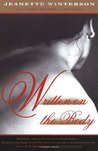 Written on the Body by Jeanette Winterson
My rating: 3 of 5 stars
This was *beautifully* written. The protagonist, gender unspecified, is a serial philanderer with a penchant for married women, who falls head over heels and into a total mess with a woman named Louise. The writing is gorgeous, the plot thin but emotionally resonant. The actual events are banal, the story focuses entirely on the protag's emotional landscape. There's a lot of sex in it, but almost no physical descriptors - the focus is all on the protag's reactions and motivations and feelings and so on.
Gorgeous book. I wasn't happy with the ending, though - I thought it felt like a cop-out. You can't tell if the appearance of Louise is real or imagined, and that's... just cheating.
Also finished: Carrie Tiffany, Mateship with Birds; Kerry Greenwood, Earthly Pleasures, Heavenly Delights and Cocaine Blues; Penne Hackforth-Jones, bio of Barbara Baynton; and Dawn French, Oh Dear Sylvia. Some of these I loved, two I was very disappointed with. Will review in further detail another week. I'm reading a at a rate of knots, but that will come to an abrupt halt at the end of the holiday.
To Read Next: I've got a Jan Clausen novel still to read, from my Gould's Books extravaganza.
Recently Finished:
Beyond (Straight and Gay) Marriage: Valuing All Families under the Law by Nancy D. PolikoffMy rating: 4 of 5 stars
This was very, very good. American-centric (and boy did it show - her section on Australian law showed a marked lack of understanding as to how much less significant state law is here), but still good.
Polikoff's key arguments were as follows:
1. That equal marriage rights do not and will not guarantee protection for a wide range of family structures, and that many LGBTetc folk will continue to be excluded if, for instance, their peers can marry but an LGBT person caring for a niece or nephew will still struggle to access the same rights in terms of access, insurance, and so on that married parents can access. Polikoff offered many examples of gay, straight, and not-sexual-at-all relationships that would not be protected by marriage equality. (For instance, a woman in New York lost her housing subsidy when she applied to have her elderly father move in, because this constituted 'overcrowding'. A spouse would have been fine.)
2. That the feminist and LGBTetc movements of the 60s and 70s worked toward recognition and protection for *all family structures*, often by decreasing the importance of marriage when it came to access to services and support. That the current focus on marriage is regressive by comparison.
3. That the rhetoric of the marriage equality movement has too easily conceded ground to the conservative 'marriage movement' backlash, in granting marriage special status and flowery rhetoric. Marriage equality activists for instance often push the same argument as conservatives, vis, that marriage is good for children. The long-term outcomes of surrendering this ground are unlikely to be good.
4. That other options exist in current US law and/or overseas, which could be strengthened and more broadly applied. For instance, there's a federal act which provides family and carer's leave (can't remember it's name) to federal employees, and it has a non-restrictive definition of family. An employee can take carer's leave for any child they share in the primary care of, for instance, regardless of whether they are or are married to that child's natural parent.
I liked this book. It articulated clearly my growing discomfort with the rhetoric of marriage & children as distilled into soundbites on the Australian Marriage Equality page. Just recently, for instance, a pair of ladies, one of whom is a US citizen and one Australian, were pictured with a caption explaining that it's so easy to enter the US: they can say 'this is my wife' and everyone understands! Then they come home and are no longer married. WELL. Yes. Except under US law they *have* to be married to migrate; you can quite easily get around in Australia as same-sex defacto partners. If airport staff don't understand 'this is my partner' then they need a re-education, but NOT in favour of marriage, bloody hell, plenty of people come and go in airports with their de-facto spouses.
And I really am getting fed up with the cute 'but why can't my mummies marry?' pictures. Why can't your mummies start by explaining that the idea that married parents are the best family is, while widely held, wrong and wrong-headed and worth challenging? HRMPH.
Also, all this concerns me in a sharply personal way, because of how my family is no longer mum & dad and two directly descended kids. The family structure surrounding my little sister is a lot more complicated than that, and, well, we *are* one of those families who, without spending a lot of time and money on wills and solicitors and so on, would end up with an inappropriate distribution of resources and legalities in the event of my parents' sudden death. Matters like care of children are not simple in my little sister's cluster of the family, either. Plus, I watched little sister try to figure out her family structure as a tot, and the overwhelming *normativity* of mum&dad&twopointfivekids really did not help her understand and embrace her own family. And the inclusion of mum&mum&twopointfivekids in the standard would not reeeeally help with that. BAH.
The Wife Drought by Annabel CrabbMy rating: 3 of 5 stars
This book is not the second coming of feminism.
It's FUN - full of anecdotes and Crabb's trademark snark, but it is not the second coming of feminism. It said nothing we did not already know (... quite frankly, aside from the stats, its key premises were well known in the EIGHTIES. Women add work to household responsibilities. Men do not typically pick up the latter. Men who do are regarded as weirdos. It would be good if we could do something about the latter two points). Crabb offers no constructive solutions or even pointers on how her examples of stay-at-home Dads do make it work. Her conclusion rather wishy-washily suggests the digital age might help, without apparently having noted that telecommuting has been on the *decline* since the financial crisis.
Plus, well, Crabb is aware of some of the sacrifices she herself makes in the name of functioning marriage rather than feminism, but I am not as rosy-eyed as she. She regards her career change as a personal positive, and maybe it is, but it still makes her a statisitic: woman shifts to less cutthroat, more flexible work environment after having kids. She doesn't quiiite see that this is probably a personal bonus for *everyone*, and that's why it happens, yanno? Although when talking about what men lose by not taking on more home duties, she does suggest that they might be missing out on the personal-development and reevaluation time that she sees many women experiencing during mat leave.
Also, although working class women do come up a fair bit, they're statistics mostly. She hasn't found many working class women or men to TALK to. Gives the impression that the only people who's workforce participation we care about is the educated elite.
HOWEVER she, unlike most tracts on the wage gap, did have the statistics to point out that the wage gap is *lower* in blue-and-pink collar jobs than white. Why? Because award wages are good for something! The wage gap in working classes seems to be affected by pink-collar streaming (childcare is paid less than road maintenance, for instance) and perhaps by women not seeking or not being promoted to supervisory positions - not by the vagaries of salary negotiations. I am really sick of hearing about the wage gap talked of primarily in terms of salary negotiations. The VAST MAJORITY of working women (and indeed men) are not in industries where they can negotiate their salary packages, geez.
Love in the Time of Global Warming by Francesca Lia BlockMy rating: 3 of 5 stars
This was pretty well written - the prose is lyrical and the story juuust skirts the edge of realism. The romance arc was pretty damn cute. The protag's devotion to her little brother was also nicely done, I love a good family-oriented YA. The structure of the Odyssey was well deployed, and by avoiding strict realism the story got away with it.
But it just didn't grab me. I can't see myself bothering to seek out the sequels.
Written on the Body by Jeanette WintersonMy rating: 3 of 5 stars
This was *beautifully* written. The protagonist, gender unspecified, is a serial philanderer with a penchant for married women, who falls head over heels and into a total mess with a woman named Louise. The writing is gorgeous, the plot thin but emotionally resonant. The actual events are banal, the story focuses entirely on the protag's emotional landscape. There's a lot of sex in it, but almost no physical descriptors - the focus is all on the protag's reactions and motivations and feelings and so on.
Gorgeous book. I wasn't happy with the ending, though - I thought it felt like a cop-out. You can't tell if the appearance of Louise is real or imagined, and that's... just cheating.
Also finished: Carrie Tiffany, Mateship with Birds; Kerry Greenwood, Earthly Pleasures, Heavenly Delights and Cocaine Blues; Penne Hackforth-Jones, bio of Barbara Baynton; and Dawn French, Oh Dear Sylvia. Some of these I loved, two I was very disappointed with. Will review in further detail another week. I'm reading a at a rate of knots, but that will come to an abrupt halt at the end of the holiday.
To Read Next: I've got a Jan Clausen novel still to read, from my Gould's Books extravaganza.
no subject
Date: 2015-01-15 08:01 am (UTC)no subject
Date: 2015-01-15 08:24 am (UTC)no subject
Date: 2015-01-15 10:09 am (UTC)I really hated Written on the body, though I agree the language is beautiful. I'm pretty sure my emotional reaction is coloured by the eeeeeeeeeevil Jewish molecular oncologist husband. Not so much that he shares identities with me and he's evil, but I'm really offended by a plot involving a scientist deliberately sabotaging his wife's health in order to promote his own career. But I hated it even without feeling personally offended, cos I generally don't like adultery plots, and I agree with you about the ending, and I never for a minute bought the narrator as anything other than female.
no subject
Date: 2015-01-15 12:05 pm (UTC)Would definitely recommend the Polikoff, and suspect