What Are You Reading Wednesday
Apr. 9th, 2014 10:05 am![[personal profile]](https://www.dreamwidth.org/img/silk/identity/user.png) highlyeccentric
highlyeccentricWhat Are You Reading Wednesday:
• What are you currently reading?
• What did you recently finish reading?
• What do you think you’ll read next?
What are you currently reading?
Slightly to my surprise, I am devouring A.S. Byatt's Still Life. I picked it up in Birmingham, along with another of her novels, having binge-read a work of non-fiction. I thought I'd get some dense fiction to slow me down a bit, and I was convinced to give Frederica another try by the blurb on the Vintage edition. Good choice! I'm finding Frederica more likeable, in fact all of the characters more likeable, and the plot more engaging than The Virgin in the Garden.
Meanwhile, I'm ploughing through McGuire's Friendship and Community - I've actually ordered my own copy, concluding that it will be easier to transfer my many postit flags into my own book than painstakingly type up notes from the Pret-entre-bibliotheque copy I have at the moment.
I've also started Karras' Unmarriages - I've only read the intro so far but I do love her style.
What did you recently finish reading
A LOT of things, as it happens. Fun books first: I finished Slow Train to Switzerland, binge-read Shiri Eisner's Bi: Notes for a Bisexual Revolution, and read my partner's battered copy of The Magic Pudding.
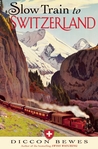 Slow Train to Switzerland: One Tour, Two Trips, 150 Years - and a World of Change Apart by Diccon Bewes
My rating: 5 of 5 stars
SO LET ME TELL YOU ABOUT THIS BOOK. British chap, living in Bern, gets hold of a mid-20th c reprint of a privately published (for the author's friends) travel journal written by a young woman on Thomas Cook's first Guided Tour of Switzerland. Said British chap, being a travel writer and afficionado of trains, gets his mother and sets out to replicate Miss Jemima's travel - only sticking to modern rail wherever possible. At every stop, from Dieppe to Neuchatel via Paris, Geneva, Chamonix, and deepest darkest Obwald, he either does whatever it was Miss Jemima did, or tries to scope out the 19th c history of the place. He fills his narrative with fabulous random tidbits about the development of swiss tourism and train travel (which it seems are inextricably entwined, leading to remarkably well-serviced rural areas and train lines which have no purpose but to go up mountains).
Me, I love historical trivia, I love historical ladies (Miss Jemima and her companions hiked over passes and glaciers and all sorts of things in full 1860s rig!), and I do love transport history. Therefore I LOVE THIS BOOK. I now have a great desire to go to Rigi and ride Europe's oldest rack railway, and to check out the Gemmi Pass (from the safety of a cable car, please). I learned so many cool things. For instance, Lake Daubensee up above Gemmi has an inlet but no outlet. It was assumed that the water sifted down through the mountains and came up at the Leukerbad springs, until some curious authority put red dye in the water. No sign of red dye in Leukerbad, but the folks in Salgesch, on the south side of the alps, were quite surprised when their springs ran red. Or, over on the north side, when in the late 20th c they put a new super-deep tunnel through the Alps, the town of Frutigen found itself dealing with 20 degree water coming out of the hills. Too warm to pump into the river straight away - so they use it to heat greenhouses and grow mangoes and bananas.
I also learned a few tidbits about Geneva - including the explanation for why the university / theatre part of town looks so freakin' much like Sydney, Melbourne or Brisbane - or not like them, because no high-rises have sprouted in between the neoclassical buildings, and the neogothic doesn't seem to have been a thing. But the resemblance is enough to be odd. Turns out Geneva knocked down its last set of town walls in one go in 1850, and rapidly expanded outwards. Bewes didn't go into much detail about the Bastions area - his fun tidbit was that the English Church, where Miss Jemima worshipped and where my theatre club meet every fortnight was erected right over the former wall - but I only needed that date and the fact I'd already figured out (that the main building is known as Uni Bastions clearly because it is right next to the last remaining bit of Bastion) for this whole section of town to make a certain sense.
I hadn't realised how much I had come to rely on having a sense of historical integration between my surroundings and myself. I suppose it started in undergrad, and now that I think about it I became super keen on Canberra's history while I lived there, and in the particular history of my suburb in Sydney. But I hadn't quite expected that 'read book with historical tidbits' would have such a significant effect on my sense of actually being settled here.
 Bi: Notes for a Bisexual Revolution by Shiri Eisner
My rating: 4 of 5 stars
I binge-read this book, which I suspect is not the normal or intended way to consume books of radical queer theory. I found it engaging, easy to connect/identify with, and admirably broad in its scope. As an academic I admire Eisner's skill in breaking down, glossing and integrating complex theoretical schools into her clear and accessible prose.
I felt that, at times, she overstates the differences between biphobia and homophobia. I was particularly unconvinced by her argument that lesbians, when subject to 'oooh can I watch / join in / etc' are being subject to biphobia (the argument is more sophisticated than that - she argues that said lesbians are read as bi, ie, potentially open to men, and then subjected to the phallocentric erasure of bi identity to which bi ladies are typically subjected. I think this is rather too convoluted and it's a whole damn lot easier to say that all lady-attracted ladies' sexualities are collectively reduced for men's entertainment).
I learned a lot of interesting things about race politics in Israel courtesy of the chapter which discusses points of common experience between Mizrahi-ness and bi-ness. In this chapter, Eisner was clear that she writes as a Mizrahi woman as well as as a bisexual, and that worked fine. I found some of her handling of race and other privilege axes odd, elsewhere in the book, because she at length disclaims her various privileges but does not locate herself. Particularly, I was uncomfortable with the fact that, outside of that chapter, she seemed to talk about 'racialized' people (her preferred term, over PoC etc) as not-us. It was not clear to me, until we reached the chapter about Mizrahiness, that this was a self-identification and a term she was comfortable with from her own experience (rather than, eg, a way of minimising racial identity).
There were also many occasions when Eisner's radical stance clashed with what seems like common-sense to me. The arguments against equal marriage, for instance. But I knew that was coming, she declared her intention to make readers uncomfortable with her radical poitics from the begining, and at least she did address economic and class-based arguments FOR equal marriage.
Oh, and another small peeve: Eisner seems to think that the 'minority world' (what used to be called the first world) consists only of anglophones, and shares all the same cultural wossnames concerning sexuality and gender. While it's true, as far as I know, that most of Europe as well as the anglosphere operates on a binary gender system, I am pretty sure there's some diversity regarding how sexual orientation is concieved of and acted upon.
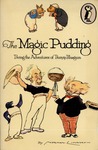 The Magic Pudding by Norman Lindsay
My rating: 3 of 5 stars
Re-read this at partners' place. I was surprised to find how little cohesion it had - I remember being annoyed with it for that reason as a child, and was surprised to find that still holds. Plus, y'know, period-standard racism, I remembered that (I at least had acquired enough historical awareness by the time I last read this to contextualise the depiction of 'Curry and Rice' the asian ship's cook - come to think of it, his origins are never specified and this would be an interesting piece of evidence for the fact that many people in Australian society did in fact interact with not-white people in the early 20th c).
Academically, I finished with Schulenberg's Forgetful of their Sex - very dense, useful in places, full of cool stories about early saints. Zipped through Rosemary Rader's Breaking Boundaries, which is that curious thing, a work of 80s Christian feminist history. Much of its good bits are now superceded by McGuire and Schulenberg, and her desire to prove that something inherent in Christianity allowed a NEW! UNIQUE! variety of interaction between the sexes makes me inherantly suspicious. Also finished with Dyas (ed), Approaching Medieval Mystic and Anchoritic Texts, which was a really interesting combination of scholarship, overview, and teaching methodology.
Read Aelred's Spiritual Friendship, concluded he's a sweetie and I'd rather be friends with him than with Cicero. Read the Friar's Tale, am most amused by the Devil's antics therein.
What do you think you'll read next?
I've been desultorily poking at 'Best Australian Poems 2013', hopefully soon something in that will turn out to be engaging. I've got an Alice Munro collection out of the uni library, might start on that when I'm done with Byatt for the time being.
• What are you currently reading?
• What did you recently finish reading?
• What do you think you’ll read next?
What are you currently reading?
Slightly to my surprise, I am devouring A.S. Byatt's Still Life. I picked it up in Birmingham, along with another of her novels, having binge-read a work of non-fiction. I thought I'd get some dense fiction to slow me down a bit, and I was convinced to give Frederica another try by the blurb on the Vintage edition. Good choice! I'm finding Frederica more likeable, in fact all of the characters more likeable, and the plot more engaging than The Virgin in the Garden.
Meanwhile, I'm ploughing through McGuire's Friendship and Community - I've actually ordered my own copy, concluding that it will be easier to transfer my many postit flags into my own book than painstakingly type up notes from the Pret-entre-bibliotheque copy I have at the moment.
I've also started Karras' Unmarriages - I've only read the intro so far but I do love her style.
What did you recently finish reading
A LOT of things, as it happens. Fun books first: I finished Slow Train to Switzerland, binge-read Shiri Eisner's Bi: Notes for a Bisexual Revolution, and read my partner's battered copy of The Magic Pudding.
Slow Train to Switzerland: One Tour, Two Trips, 150 Years - and a World of Change Apart by Diccon BewesMy rating: 5 of 5 stars
SO LET ME TELL YOU ABOUT THIS BOOK. British chap, living in Bern, gets hold of a mid-20th c reprint of a privately published (for the author's friends) travel journal written by a young woman on Thomas Cook's first Guided Tour of Switzerland. Said British chap, being a travel writer and afficionado of trains, gets his mother and sets out to replicate Miss Jemima's travel - only sticking to modern rail wherever possible. At every stop, from Dieppe to Neuchatel via Paris, Geneva, Chamonix, and deepest darkest Obwald, he either does whatever it was Miss Jemima did, or tries to scope out the 19th c history of the place. He fills his narrative with fabulous random tidbits about the development of swiss tourism and train travel (which it seems are inextricably entwined, leading to remarkably well-serviced rural areas and train lines which have no purpose but to go up mountains).
Me, I love historical trivia, I love historical ladies (Miss Jemima and her companions hiked over passes and glaciers and all sorts of things in full 1860s rig!), and I do love transport history. Therefore I LOVE THIS BOOK. I now have a great desire to go to Rigi and ride Europe's oldest rack railway, and to check out the Gemmi Pass (from the safety of a cable car, please). I learned so many cool things. For instance, Lake Daubensee up above Gemmi has an inlet but no outlet. It was assumed that the water sifted down through the mountains and came up at the Leukerbad springs, until some curious authority put red dye in the water. No sign of red dye in Leukerbad, but the folks in Salgesch, on the south side of the alps, were quite surprised when their springs ran red. Or, over on the north side, when in the late 20th c they put a new super-deep tunnel through the Alps, the town of Frutigen found itself dealing with 20 degree water coming out of the hills. Too warm to pump into the river straight away - so they use it to heat greenhouses and grow mangoes and bananas.
I also learned a few tidbits about Geneva - including the explanation for why the university / theatre part of town looks so freakin' much like Sydney, Melbourne or Brisbane - or not like them, because no high-rises have sprouted in between the neoclassical buildings, and the neogothic doesn't seem to have been a thing. But the resemblance is enough to be odd. Turns out Geneva knocked down its last set of town walls in one go in 1850, and rapidly expanded outwards. Bewes didn't go into much detail about the Bastions area - his fun tidbit was that the English Church, where Miss Jemima worshipped and where my theatre club meet every fortnight was erected right over the former wall - but I only needed that date and the fact I'd already figured out (that the main building is known as Uni Bastions clearly because it is right next to the last remaining bit of Bastion) for this whole section of town to make a certain sense.
I hadn't realised how much I had come to rely on having a sense of historical integration between my surroundings and myself. I suppose it started in undergrad, and now that I think about it I became super keen on Canberra's history while I lived there, and in the particular history of my suburb in Sydney. But I hadn't quite expected that 'read book with historical tidbits' would have such a significant effect on my sense of actually being settled here.
Bi: Notes for a Bisexual Revolution by Shiri EisnerMy rating: 4 of 5 stars
I binge-read this book, which I suspect is not the normal or intended way to consume books of radical queer theory. I found it engaging, easy to connect/identify with, and admirably broad in its scope. As an academic I admire Eisner's skill in breaking down, glossing and integrating complex theoretical schools into her clear and accessible prose.
I felt that, at times, she overstates the differences between biphobia and homophobia. I was particularly unconvinced by her argument that lesbians, when subject to 'oooh can I watch / join in / etc' are being subject to biphobia (the argument is more sophisticated than that - she argues that said lesbians are read as bi, ie, potentially open to men, and then subjected to the phallocentric erasure of bi identity to which bi ladies are typically subjected. I think this is rather too convoluted and it's a whole damn lot easier to say that all lady-attracted ladies' sexualities are collectively reduced for men's entertainment).
I learned a lot of interesting things about race politics in Israel courtesy of the chapter which discusses points of common experience between Mizrahi-ness and bi-ness. In this chapter, Eisner was clear that she writes as a Mizrahi woman as well as as a bisexual, and that worked fine. I found some of her handling of race and other privilege axes odd, elsewhere in the book, because she at length disclaims her various privileges but does not locate herself. Particularly, I was uncomfortable with the fact that, outside of that chapter, she seemed to talk about 'racialized' people (her preferred term, over PoC etc) as not-us. It was not clear to me, until we reached the chapter about Mizrahiness, that this was a self-identification and a term she was comfortable with from her own experience (rather than, eg, a way of minimising racial identity).
There were also many occasions when Eisner's radical stance clashed with what seems like common-sense to me. The arguments against equal marriage, for instance. But I knew that was coming, she declared her intention to make readers uncomfortable with her radical poitics from the begining, and at least she did address economic and class-based arguments FOR equal marriage.
Oh, and another small peeve: Eisner seems to think that the 'minority world' (what used to be called the first world) consists only of anglophones, and shares all the same cultural wossnames concerning sexuality and gender. While it's true, as far as I know, that most of Europe as well as the anglosphere operates on a binary gender system, I am pretty sure there's some diversity regarding how sexual orientation is concieved of and acted upon.
The Magic Pudding by Norman LindsayMy rating: 3 of 5 stars
Re-read this at partners' place. I was surprised to find how little cohesion it had - I remember being annoyed with it for that reason as a child, and was surprised to find that still holds. Plus, y'know, period-standard racism, I remembered that (I at least had acquired enough historical awareness by the time I last read this to contextualise the depiction of 'Curry and Rice' the asian ship's cook - come to think of it, his origins are never specified and this would be an interesting piece of evidence for the fact that many people in Australian society did in fact interact with not-white people in the early 20th c).
Academically, I finished with Schulenberg's Forgetful of their Sex - very dense, useful in places, full of cool stories about early saints. Zipped through Rosemary Rader's Breaking Boundaries, which is that curious thing, a work of 80s Christian feminist history. Much of its good bits are now superceded by McGuire and Schulenberg, and her desire to prove that something inherent in Christianity allowed a NEW! UNIQUE! variety of interaction between the sexes makes me inherantly suspicious. Also finished with Dyas (ed), Approaching Medieval Mystic and Anchoritic Texts, which was a really interesting combination of scholarship, overview, and teaching methodology.
Read Aelred's Spiritual Friendship, concluded he's a sweetie and I'd rather be friends with him than with Cicero. Read the Friar's Tale, am most amused by the Devil's antics therein.
What do you think you'll read next?
I've been desultorily poking at 'Best Australian Poems 2013', hopefully soon something in that will turn out to be engaging. I've got an Alice Munro collection out of the uni library, might start on that when I'm done with Byatt for the time being.
no subject
Date: 2014-04-09 10:44 am (UTC)I completely agree about The magic pudding; even as a kid I found it slightly incoherent and slightly racist. What I liked about it was the Australian-ness, and I can't imagine it would have much appeal to you as a depiction of an exotic landscape and culture(!)
no subject
Date: 2014-04-09 12:26 pm (UTC)