![[personal profile]](https://www.dreamwidth.org/img/silk/identity/user.png)
What Are You Reading Wednesday
Mar. 13th, 2019 09:20 pmCurrently Reading:
Fiction: Yelena Moscovitch, Virtuoso, which I have not yet bitten the bullet and DNF'd; André Aciman, Call Me By Your Name, although on hiatus
Lit Mag: Meanjin summer 2017
Academic: Nothing!
Other non-fiction: Also nothing, unless you count training docs for upcoming job.
Recently Finished:
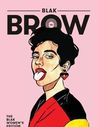 Black Brow: The Blak Women's Edition by Paola Balla
My rating: 4 of 5 stars
A really strong, interesting edition. Its strengths, aside from the rarity of the issue itself (co-edited by an unusually large team, all indigenous, only one a man), include the sheer range of content types. Art, comics, fiction, fictionalised narratives drawn from composite real life examples, cultural criticism, dialogue pieces, poetry, and more.
I was particularly struck by 'The Walk and Talk', an edited transcript of a conversation between Paola Balla and her mum Rosie Kalina. I know planning went into it, but unlike a conventional magazine interview format, some (perhaps most?) of that planning is preserved in the opening of the transcript itself. Karen Jackson's essay 'A Yorta Yorta Fire', on, among other things, communal mourning, and the position of an indigenous academic unit within the white university, was very moving. Lidia Thorpe's maiden speech to the Victorian Legislative Council is reproduced in full. Timmah Ball's essay 'Imagining Lisa: Dreaming in Urban Spaces' is fascinating (as, in my experience, all of Ball's work is - fascinating, and both intellectually and culturally challenging).
Poetry wise, Evelyn Araleun's 'Fern Your Own Gully' really stuck with me, and provides a great intertext to her recent essay in the Sydney Review of Books.
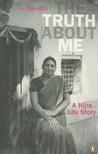 The Truth About Me: A Hijra Life Story by A. Revathi
My rating: 5 of 5 stars
This was a really worthwhile read. I loved the narrative voice Revathi and her translator convey: warm and personal, as if you were sitting down to drink tea with her, but not overly familiar or confessional - you aren't her *very best friend* taking tea with her. The tone is almost mentorly: explaining, assuming goodwill on your part, but not focused on justifying herself. Even as she recounts her early life and struggles, there's a strong narratorial presence of the older Revathi. At times she draws back, recounting difficult events and situations with relatively little commentary, so I did find myself almost questioning if she would be okay - but the nature of the memoir is you know she must, at least okay enough to be writing a memoir.
There's a lot of care put into deciding when to present a concept or word in situ (eg: it is never explained why, in Revathi's home state, 'number nine' is a slur for both a hijra and a feminine man) and when to provide an explanation (at one point there's a table of the names used for different family members within a hijra community), and I really admire the work put into that. It's not a matter of dumbing down for white readers, either - the book was originally published in English, not Tamil or any of the many other Indian languages, so the explanations are as much about clarifying either hijra-specific terms, or terms and concepts dominant in Indian religious or language group, as they are about communicating to the anglophone world. I had the impression, although I can't be sure, that the concepts left unexplained / words untranslated are ones that might be broadly familiar across India.
( additional note on how Revathi talks about gendered existence )
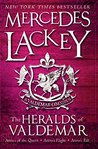 The Heralds of Valdemar by Mercedes Lackey
My rating: 4 of 5 stars
Verily, I have found the fiction of my id, and it it has magic horses as a basis of a system of government, telepathic/empathic sex, dubious mentor/mentee situations, magic snowstorms, and... quite frankly a pretty wobbly plot. I have many complaints, ranging from worldbuilding to plotting (look, there's 'denying a fated love bond' plots, and there's... this) to 'you tried, but... no' w/r/t to the treatment of rape (I was with her, I don't have a problem with rape *occurring* in my high fantasy, RIGHT UP UNTIL ONE LINE IN THE FINAL CHAPTER and then nope, so much nope).
I could write a proper review, but let us acknowledge that my id has spoken and it has said: we like magic horses. Another!
Online Fiction:
T. Kingfisher, The Rose MacGregor Drinking and Admiration Society. There's a lot of Oggishness about this piece.
Another couple of episodes of 'Under Pressure', the podcast about a lit scholar on a submarine.
Music notes: still all Hozier all the time, here. I wish to sit Hozier down and enquire as to his opinions on Augustinian vs Thomistic stances on pre-lapsarian sex.
Fiction: Yelena Moscovitch, Virtuoso, which I have not yet bitten the bullet and DNF'd; André Aciman, Call Me By Your Name, although on hiatus
Lit Mag: Meanjin summer 2017
Academic: Nothing!
Other non-fiction: Also nothing, unless you count training docs for upcoming job.
Recently Finished:
Black Brow: The Blak Women's Edition by Paola BallaMy rating: 4 of 5 stars
A really strong, interesting edition. Its strengths, aside from the rarity of the issue itself (co-edited by an unusually large team, all indigenous, only one a man), include the sheer range of content types. Art, comics, fiction, fictionalised narratives drawn from composite real life examples, cultural criticism, dialogue pieces, poetry, and more.
I was particularly struck by 'The Walk and Talk', an edited transcript of a conversation between Paola Balla and her mum Rosie Kalina. I know planning went into it, but unlike a conventional magazine interview format, some (perhaps most?) of that planning is preserved in the opening of the transcript itself. Karen Jackson's essay 'A Yorta Yorta Fire', on, among other things, communal mourning, and the position of an indigenous academic unit within the white university, was very moving. Lidia Thorpe's maiden speech to the Victorian Legislative Council is reproduced in full. Timmah Ball's essay 'Imagining Lisa: Dreaming in Urban Spaces' is fascinating (as, in my experience, all of Ball's work is - fascinating, and both intellectually and culturally challenging).
Poetry wise, Evelyn Araleun's 'Fern Your Own Gully' really stuck with me, and provides a great intertext to her recent essay in the Sydney Review of Books.
The Truth About Me: A Hijra Life Story by A. RevathiMy rating: 5 of 5 stars
This was a really worthwhile read. I loved the narrative voice Revathi and her translator convey: warm and personal, as if you were sitting down to drink tea with her, but not overly familiar or confessional - you aren't her *very best friend* taking tea with her. The tone is almost mentorly: explaining, assuming goodwill on your part, but not focused on justifying herself. Even as she recounts her early life and struggles, there's a strong narratorial presence of the older Revathi. At times she draws back, recounting difficult events and situations with relatively little commentary, so I did find myself almost questioning if she would be okay - but the nature of the memoir is you know she must, at least okay enough to be writing a memoir.
There's a lot of care put into deciding when to present a concept or word in situ (eg: it is never explained why, in Revathi's home state, 'number nine' is a slur for both a hijra and a feminine man) and when to provide an explanation (at one point there's a table of the names used for different family members within a hijra community), and I really admire the work put into that. It's not a matter of dumbing down for white readers, either - the book was originally published in English, not Tamil or any of the many other Indian languages, so the explanations are as much about clarifying either hijra-specific terms, or terms and concepts dominant in Indian religious or language group, as they are about communicating to the anglophone world. I had the impression, although I can't be sure, that the concepts left unexplained / words untranslated are ones that might be broadly familiar across India.
( additional note on how Revathi talks about gendered existence )
The Heralds of Valdemar by Mercedes LackeyMy rating: 4 of 5 stars
Verily, I have found the fiction of my id, and it it has magic horses as a basis of a system of government, telepathic/empathic sex, dubious mentor/mentee situations, magic snowstorms, and... quite frankly a pretty wobbly plot. I have many complaints, ranging from worldbuilding to plotting (look, there's 'denying a fated love bond' plots, and there's... this) to 'you tried, but... no' w/r/t to the treatment of rape (I was with her, I don't have a problem with rape *occurring* in my high fantasy, RIGHT UP UNTIL ONE LINE IN THE FINAL CHAPTER and then nope, so much nope).
I could write a proper review, but let us acknowledge that my id has spoken and it has said: we like magic horses. Another!
Online Fiction:
Music notes: still all Hozier all the time, here. I wish to sit Hozier down and enquire as to his opinions on Augustinian vs Thomistic stances on pre-lapsarian sex.