![[personal profile]](https://www.dreamwidth.org/img/silk/identity/user.png) highlyeccentric
highlyeccentricAlso I have read very little in the last month.
What are you currently reading: pottering through Portrait of a Lady, still; made inroads on 'The Sex Myth', and right now rolling around gleefully in a newly-purchased e-book of "The Eyre Affair". Plus for work I'm getting back to Convergence Culture.
What have you recently finished reading: ie, in the last month.
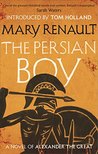 The Persian Boy: A Novel of Alexander the Great: A Virago Modern Classic by Mary Renault
My rating: 5 of 5 stars
I liked this *very much*. Renault seems to have got over her weird euphemistic compulsions around sex; Bagoas makes a great narrator; and my fixation on historical accuracy when it comes to minor details is pleased with the fact that the horses have no stirrups, and this is regularly indicated without mentioning the word 'stirrup'.
I just. Alexander. D'aww. Hephastion. D'aww. Bagoas, triple D'aww.
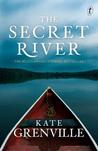 The Secret River by Kate Grenville
My rating: 4 of 5 stars
I... don't know what to make of this. I was gripped by it, and spent a lot of time trying to track geographical details on the Hawkesbury via googlemaps. It's so easy to forget how *isolated* those parts were from the main settlement. On the other hand, I do not understand why Grenville has her protag trade coal with a penal colony in Port Stephens. There is neither penal colony nor coal in Port Stephens - that's Newcastle, any basic wikipedia user can tell you that.
OK, so, Colonialism and Race. Most of the issues come down to that: it's a story that acknowledges the reality of colonial violence, but it's still a story about white people. I... think that has value. Because we tell stories about our convict past all the time in Australia, but rarely do we put names and ancestry and motivations to the part where we tried bloody hard to wipe out an entire race. We don't have, say, a brave Cowboys vs Indians mythology: we brush over it, or talk in statistics and broad brushstrokes. We don't need a Cowboys vs Indians myth, but there's something to be said for getting right up in the face of the fact that your ancestors, yes yours, committed horrible atrocities.
Then there's the brutal, blow-by-blow battle scene, complete with disembowelments and goodness knows what else. That was... uh. Well, it's certainly not a heroic conquest tale. I am really not sure about the reader-as-spectator-voyeur on that massacre. Reader as witness is the optimum outcome, and I wouldn't have been comfortable with glossing it over or *not* having the protag attend the massacre, either. (I do wonder how it would have turned out if Grenville had not written William as a *reluctant* participant. It takes a ton of skill to write through the eyes of a person enthusiastically committing historically-accurate deeds and yet indicate that they are repugnant, evil deeds. I have seen this carried off before, but with respect to much further-distant history.)
My real problem is with the ending: it came on too fast, glossed over too much, and I really did feel like William's wistfully-staring-into-the-forest-feeling-something-is-lacking was a cop-out. Oh noes, white people are missing out. Here I wonder if an abrupt switch of focalisation would have worked better: if the final concluding info-dump had been given through the eyes of Long Jack, rather than William, it could have been very effective and also avoided the scrappy edges of the characterisation that show up in the rapid fast-forward of William's POV.
What will you read next? I bought myself a copy of Jingo for Christmas. :D
What are you currently reading: pottering through Portrait of a Lady, still; made inroads on 'The Sex Myth', and right now rolling around gleefully in a newly-purchased e-book of "The Eyre Affair". Plus for work I'm getting back to Convergence Culture.
What have you recently finished reading: ie, in the last month.
The Persian Boy: A Novel of Alexander the Great: A Virago Modern Classic by Mary RenaultMy rating: 5 of 5 stars
I liked this *very much*. Renault seems to have got over her weird euphemistic compulsions around sex; Bagoas makes a great narrator; and my fixation on historical accuracy when it comes to minor details is pleased with the fact that the horses have no stirrups, and this is regularly indicated without mentioning the word 'stirrup'.
I just. Alexander. D'aww. Hephastion. D'aww. Bagoas, triple D'aww.
The Secret River by Kate GrenvilleMy rating: 4 of 5 stars
I... don't know what to make of this. I was gripped by it, and spent a lot of time trying to track geographical details on the Hawkesbury via googlemaps. It's so easy to forget how *isolated* those parts were from the main settlement. On the other hand, I do not understand why Grenville has her protag trade coal with a penal colony in Port Stephens. There is neither penal colony nor coal in Port Stephens - that's Newcastle, any basic wikipedia user can tell you that.
OK, so, Colonialism and Race. Most of the issues come down to that: it's a story that acknowledges the reality of colonial violence, but it's still a story about white people. I... think that has value. Because we tell stories about our convict past all the time in Australia, but rarely do we put names and ancestry and motivations to the part where we tried bloody hard to wipe out an entire race. We don't have, say, a brave Cowboys vs Indians mythology: we brush over it, or talk in statistics and broad brushstrokes. We don't need a Cowboys vs Indians myth, but there's something to be said for getting right up in the face of the fact that your ancestors, yes yours, committed horrible atrocities.
Then there's the brutal, blow-by-blow battle scene, complete with disembowelments and goodness knows what else. That was... uh. Well, it's certainly not a heroic conquest tale. I am really not sure about the reader-as-spectator-voyeur on that massacre. Reader as witness is the optimum outcome, and I wouldn't have been comfortable with glossing it over or *not* having the protag attend the massacre, either. (I do wonder how it would have turned out if Grenville had not written William as a *reluctant* participant. It takes a ton of skill to write through the eyes of a person enthusiastically committing historically-accurate deeds and yet indicate that they are repugnant, evil deeds. I have seen this carried off before, but with respect to much further-distant history.)
My real problem is with the ending: it came on too fast, glossed over too much, and I really did feel like William's wistfully-staring-into-the-forest-feeling-something-is-lacking was a cop-out. Oh noes, white people are missing out. Here I wonder if an abrupt switch of focalisation would have worked better: if the final concluding info-dump had been given through the eyes of Long Jack, rather than William, it could have been very effective and also avoided the scrappy edges of the characterisation that show up in the rapid fast-forward of William's POV.
What will you read next? I bought myself a copy of Jingo for Christmas. :D